China Low cost Injection molding machines supplier

Setting of injection mold temperature and pressure
August 20, 2021
Setting of injection mold temperature
Mold temperature affects the molding cycle and molding quality. In actual operation, it is set from the lowest appropriate mold temperature of the material used, and then adjusted to a higher level according to the quality condition. ·
To put it right, mold temperature refers to the temperature of the cavity surface when molding is performed. In mold design and molding engineering condition setting, it is important not only to maintain an appropriate temperature, but also to make it evenly distributed.
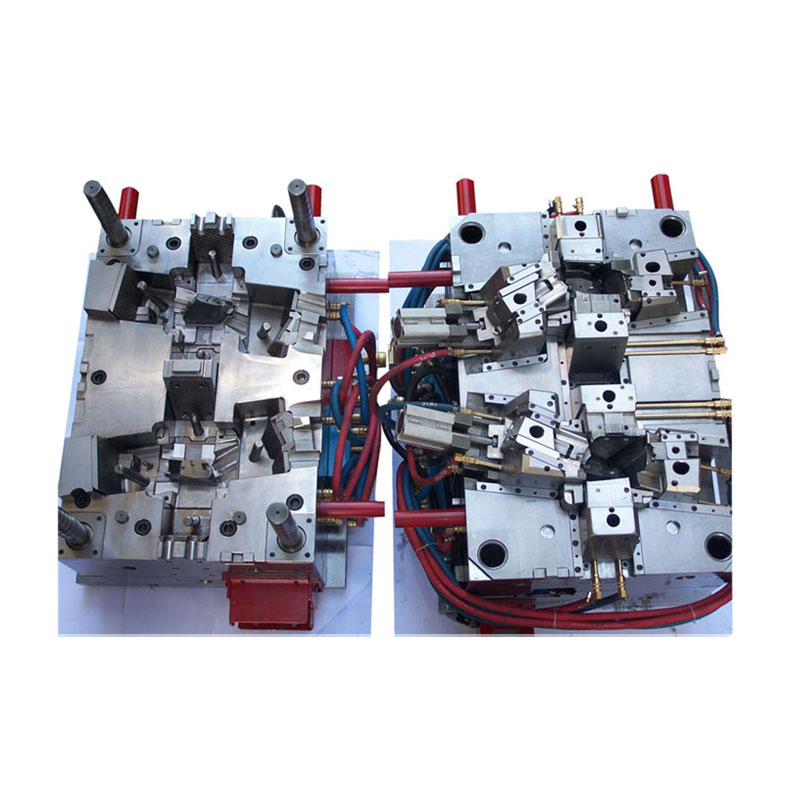
Uneven mold temperature distribution will cause uneven shrinkage and internal stress, which makes the molding mouth prone to deformation and warping. To
The following effects can be obtained by increasing the mold temperature;
①Add crystallinity and more uniform structure of molded products. To
② Make the molding shrinkage more fully and reduce the post-shrinkage.
③Improve the strength and heat resistance of molded products.
④Reduce residual internal stress, molecular alignment and deformation.
⑤Reduce the flow resistance during filling and reduce the pressure loss
⑥Make the appearance of the molded product more shiny and good
⑦Increase the chance of burrs on molded products. To
⑧Increase the near gate part and reduce the chance of recession in the far gate part.
⑨Reduce the obvious degree of the bonding line⑩Increase the cooling time
Pressure adjustment in the injection molding process Whether it is a hydraulic or electric injection molding machine, all movements in the injection molding process will generate pressure. Only by properly controlling the required pressure can a finished product of reasonable quality be produced.
The pressure control and metering system is on the hydraulic injection molding machine, and all movements are executed by the oil circuit responsible for the following operations:
1 The screw rotates in the plasticizing stage.
2 sliding seat material path (nozzle is close to the nozzle bushing)
3 Axial movement of the injection screw during injection and holding pressure
4 Close the base material on the ejector rod until the toggle rod is fully extended or the piston mold clamping stroke has been completed. 5 Start the ejection stage of the assembly ejector rod to eject the components. To
…
On a full-voltage machine, all movements are performed by a brushless synchronous motor equipped with permanent magnets. Through the ball bearing screw that has been used in the machine tool industry, the rotary motion is converted into linear motion. The efficiency of the entire process partly depends on the plasticization process, among which the screw plays a very critical role.
The screw must ensure that the material is melted and homogenized. This process can be adjusted with the help of back pressure to avoid overheating. The mixing element must not generate excessively high flow rates, otherwise it will cause polymer degradation.
Each polymer has a different maximum flow rate. If this limit is exceeded, the molecules will stretch and the polymer backbone will break. However, the focus is still to control the forward axial movement of the screw during injection and pressure holding. The subsequent cooling process, including internal stress, tolerance and warpage, is very important to ensure product quality. All this is determined by the quality of the mold, especially when optimizing the cooling channel and ensuring effective closed-loop temperature regulation. The system is completely independent and will not interfere with mechanical adjustments.
Mold movement such as mold closing and ejection must be precise and efficient. The speed distribution curve is usually used to ensure that the moving parts are accurately approached. The contact maintaining force can be adjusted. Therefore, it can be concluded that, without considering energy consumption and mechanical reliability, and the same additional conditions (such as mold quality), product quality is mainly determined by the system that controls the forward movement of the screw. On a hydraulic injection molding machine, this adjustment is achieved by detecting the oil pressure.
Specifically, the oil pressure activates a set of valves through the control panel, and the fluid acts through the manipulator, and is adjusted and released.
Injection speed control includes options such as open loop control, semi-closed loop control and closed loop control. The open loop system relies on a shared proportional valve. The proportional tension is applied to the fluid of the required ratio, so that the fluid generates pressure in the injection barrel.And the injection screw moves at a certain forward speed.
The semi-closed loop system uses a closed loop proportional valve. The loop is closed at the position where the closed port is located, and the closed port controls the flow rate of the oil by moving in the valve. The closed loop system is closed at the screw translation speed. A speed sensor (usually a potentiometer type) is used in the closed loop system to detect the tension drop regularly. The oil flowing out of the proportional valve can be adjusted to compensate for the speed deviation.
Closed-loop control relies on dedicated electronic components integrated with the injection molding machine. Closed-loop pressure control can ensure uniform pressure during the injection and pressure holding stages, as well as uniform back pressure in each cycle. The proportional valve is adjusted by the detected pressure value, and the deviation compensation is performed according to the set pressure value.
Generally speaking, the hydraulic pressure can be monitored, but detecting the melt pressure in the nozzle or cavity is another effective method. A more reliable solution is to manage the proportional valve by reading the nozzle or cavity pressure readings. Adding temperature detection on the basis of pressure detection is particularly conducive to process management.
Knowing the actual pressure that the material can withstand can also help predict the actual weight and size of the molded part based on the set pressure and temperature conditions. In fact, by changing the holding pressure value, more materials can be introduced into the mold cavity to reduce component shrinkage and meet design tolerances (including preset injection shrinkage). When approaching melting conditions, semi-crystalline polymers show a great change in specific volume. In this regard, overfilling will not hinder the ejection of the part.
If you want to know which injection machine your product is suitable for, and know the price of injection molding machine, you can click on the online customer service or call for consultation! FLYSE service hotline: 8618958305290
Blog
Maybe you like also
Copy©2013 | China Ningbo Flyse Plastic Machinery Co.,ltd. | Sitemap
Service
Flyse Make Your Dreams Fly!
Scan it, Talk for better
