China Low cost Injection molding machines supplier

tie rod fracture of the injection molding machine’s reasons analysis
August 17, 2021
One, analysis of the reasons for the fracture of the tie rod of the injection molding machine
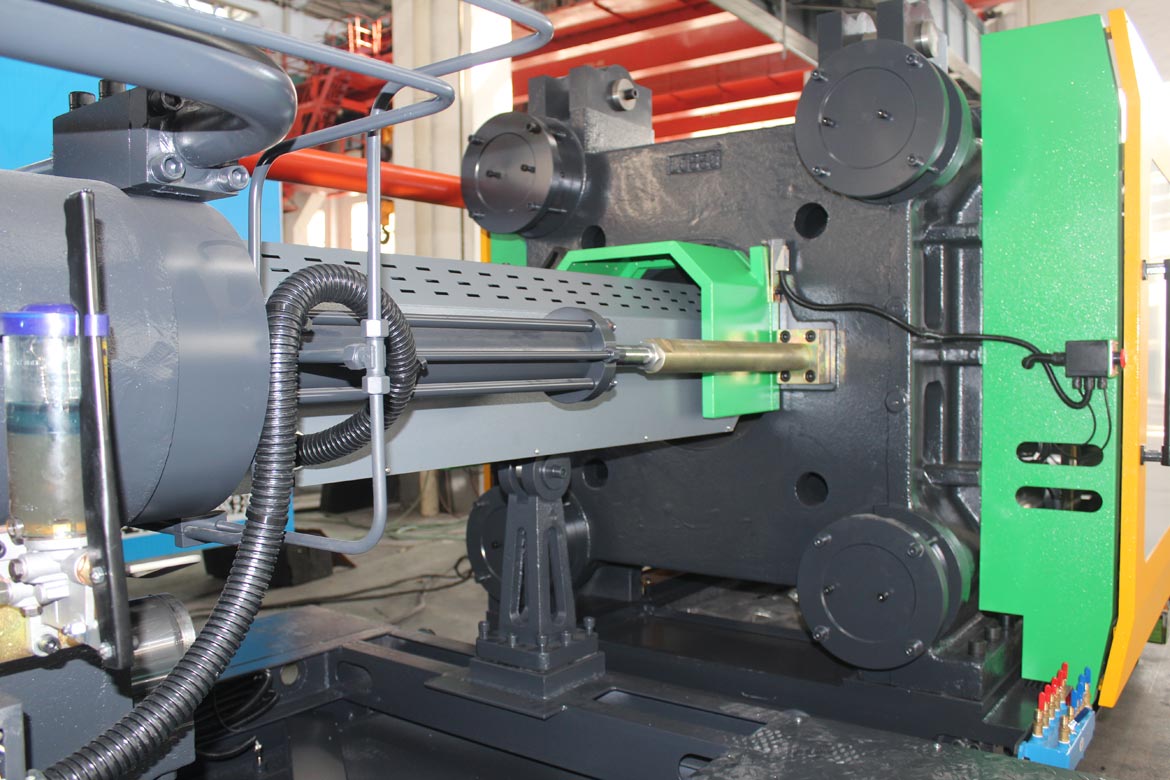
Fatigue failure. The working process of the injection molding machine is a process of alternating stress, so any factor that causes stress concentration may lead to fatigue failure.
like:
- The step where the shaft diameter changes greatly.
- Lack of rounded corners, undercuts, etc. at the transition.
- Surface scratches or machined threads accidentally damage the surface of the optical axis.
- The surface roughness of the thread is too large.
- The thread is compressed for a long time, and the surface is damaged due to insufficient surface strength (at the die adjusting nut).
- Improper heat treatment of the thread surface causes stress concentration.
- Material defects.
Overload pull off:
Since the toggle lever type relies on the deformation of the four tie rods to obtain the clamping force, if the length of the four tie rods is different, the deformation will be different. 1/4 of the clamping force it bears, causing it to break.
Temperature strain causes breaking:
If the four tie rods are different in length, for example, one is long and three are short, then the thermal stress caused by the rapid temperature increase or decrease of the longer tie rod will be constrained by the other three rods and be in a static state, which will cause the tie rod fracture.
Breaking caused by compound strain:
If the mold is not flat, the combined error of the length of the connecting rod (hinge), the height of the bearing seat and the length of the tie rod is too large. When the connecting rod is straightened, the force on both sides will be uneven.
like:
- The rear template is caused to swing, the tie rod is bent, and the tie rod is easily broken under the action of bending stress and tensile stress.
- As a result of product flash, generally inexperienced operators will further increase the clamping force, which will cause the pull rod to break and the mold to deform due to overload.
Damage caused by instantaneous impact stress:
Since the toggle lever type can only release the clamping force before the mold is opened,
like:
- The instantaneous impact when opening the mold causes the machine to vibrate and damage the tie rods and other parts.
- Since the entire clamping part (including the mold) is kept under stress for a long time, it will lead to premature fatigue failure of the part.
Two, the solution
- In design, avoid sharp changes in shaft diameter. Try to use large rounded transitions at steps or undercuts, choose materials with better comprehensive performance, and special treatment must solve the thread surface hardness (to be abrasion resistant) and Try to reduce surface stress concentration, improve surface finish, and minimize stress damage.
- To ensure the machining accuracy, especially the length of the connecting rod, the height of the bearing seat, the accuracy of the crosshead, and the positioning accuracy of the bearing seat on the template.
- Pay special attention to the length of the four tie rods when assembling or after disassembling the moldadjusting nut, and the distance between the mold adjusting nut and the rear template must also be adjusted.
If you have any questions on tie rod ,plz feel free to ask FLYSE team,we will give you best service!
Whatsapp/Wechat 008618958305290
Blog
Maybe you like also
Copy©2013 | China Ningbo Flyse Plastic Machinery Co.,ltd. | Sitemap
Service
Flyse Make Your Dreams Fly!
Scan it, Talk for better
